

Where innovation is the currency of progress, businesses are increasingly recognising the need for more than just technical skills and traditional diversity metrics. They’re realising that true innovation thrives in cognitively diverse environments—where a mix of thinking styles, perspectives, and behavioural approaches converge to spark creativity, challenge norms, and solve complex problems.
But what exactly is cognitive diversity? And how can businesses harness it to gain a competitive edge?

What Is Cognitive Diversity?
Cognitive diversity refers to the inclusion of people who think differently—who bring varied mental models, problem-solving approaches, perspectives, and heuristics. Unlike demographic diversity, which focuses on visible traits like gender, age, or ethnicity, cognitive diversity is often invisible. It encompasses how individuals perceive the world, process information, and make decisions.
Harvard Business Review defines cognitive diversity as “differences in perspective or information processing styles.” It’s the richness of thought that comes from people who see the world differently—and it’s proving to be a crucial asset in business settings that rely on agility, adaptability, and innovation.
Why Cognitive Diversity Matters for Innovation
Innovation rarely emerges from uniformity. When teams consist of people who think and behave similarly, they’re more prone to groupthink—a psychological phenomenon where the desire for harmony leads to poor decision-making and missed opportunities. Conversely, when teams include a variety of cognitive approaches, they’re more likely to challenge assumptions, reframe problems, and discover novel solutions.
Research from Deloitte found that teams with cognitive diversity solve problems faster than those that are cognitively homogenous. Another study published in PNAS (Proceedings of the National Academy of Sciences) showed that groups with social and cognitive diversity outperformed groups of high-ability problem solvers—highlighting the unique value that diverse thinkers bring to the table.

In short, cognitive diversity:
- Fosters creative thinking
- Encourages healthy conflict
- Drives adaptive problem-solving
- Enhances decision-making under uncertainty
These are precisely the capabilities that modern businesses need to stay ahead in fast-moving, complex markets.
Thinking Styles and Behavioural Preferences: The Hidden Drivers
People don’t just differ in what they know—they differ in how they think, how they prefer to work, how they approach risk, and how they respond to change. Some are big-picture thinkers; others focus on the fine details. Some thrive in ambiguity and experimentation, while others bring process, structure, and risk-mitigation to the fore.
These thinking and behavioural differences shape how individuals tackle challenges and collaborate within teams. Yet, many organisations remain unaware of them—or worse, unknowingly recruit and promote individuals who all operate in similar ways.
For example:
- An overabundance of dominant, fast-deciding personalities can lead to hasty decisions with little reflection.
- A team of cautious, data-driven thinkers may suffer from analysis paralysis.
- A lack of emotionally intuitive members may result in poor stakeholder engagement and interpersonal friction.
By consciously assessing and balancing cognitive and behavioural preferences within a team or organisation, businesses can create fertile ground for innovation to flourish.

Creating a Culture That Embraces Cognitive Diversity
Recognising the value of cognitive diversity is just the first step. The real challenge lies in embedding it into the culture, systems, and leadership practices of an organisation. Here’s how learning and development professionals, team leaders, and talent strategists can help create a culture that embraces it:
1. Rethink Recruitment and Promotion Criteria
Traditional hiring processes often focus on cultural fit and past performance. But cultural fit can be a double-edged sword if it leads to homogeneity. Instead, consider cultural contribution: What new perspectives could this candidate bring? How do they approach challenges differently?
Behavioural profiling tools can be powerful allies in this process, helping recruiters identify and map thinking styles and cognitive traits that are underrepresented in a team.
2. Foster Psychological Safety
Cognitive diversity only works when people feel safe to express divergent views. Teams must be encouraged to voice disagreements, challenge the status quo, and bring up unconventional ideas without fear of ridicule or retaliation. As Amy Edmondson’s research at Harvard has shown, psychological safety is a key ingredient in high-performing, innovative teams.

3. Train Leaders to Value Difference
Leaders play a crucial role in setting the tone for inclusive thinking. They need to be aware of their own biases and default thinking patterns—and learn to actively seek out perspectives that contrast with their own. Leadership development should therefore include components on behavioural awareness, emotional intelligence, and inclusive decision-making.
4. Create Cross-Functional, Cross-Style Collaboration
Diverse thinking is often stifled by silos. Create opportunities for cross-functional teams to work together on strategic challenges or innovation projects. Encourage collaboration between individuals with complementary thinking styles—e.g., pairing visionary thinkers with detail-oriented implementers, or planners with improvisers.
5. Use Behavioural Insights to Build Balanced Teams
Understanding the behavioural preferences and cognitive styles within your teams allows for more strategic team composition. A well-balanced team—where diverse approaches are understood, respected, and utilised—has a far better chance of adapting quickly and generating breakthrough ideas.
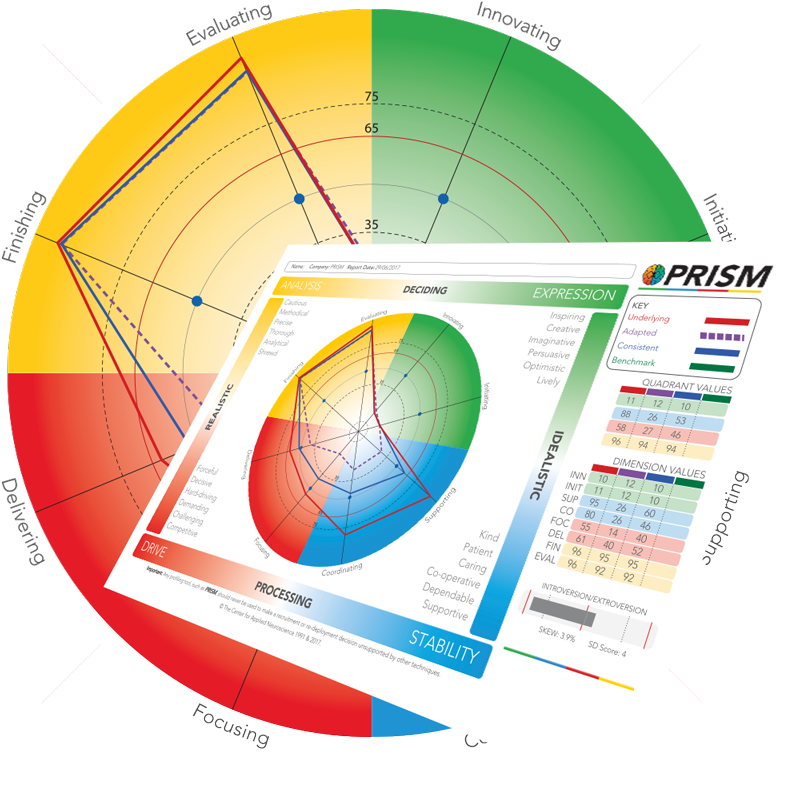
While this blog won’t delve deeply into specific tools, it’s worth noting that behavioural profiling solutions grounded in neuroscience can offer invaluable insights into how people prefer to think, work, and interact. These tools help uncover invisible diversity, giving teams the self-awareness and shared language needed to thrive together.
A Strategic Imperative
Cognitive diversity is not just a nice-to-have; it’s a strategic imperative. In the age of AI, automation, and disruption, the ability to innovate—and to do so continually—has become a core competitive advantage. Businesses can’t afford to rely on one way of thinking or one type of leader.
Embracing cognitive diversity means going beyond surface-level inclusion and unlocking the full potential of your people. It requires intentionality, the right tools, and a commitment to creating an environment where every voice matters—and where differences aren’t just tolerated but celebrated.
As you shape your learning and development strategy, consider how you can surface and leverage the diverse cognitive strengths already within your organisation—and how new perspectives can be brought in to future-proof your teams.

After all, innovation begins with thinking differently. And thinking differently begins with building teams who do just that.
Interested in understanding and enhancing cognitive diversity in your team?
Visit www.prismbrainmapping.com to explore how behavioural insights can help you build better, more innovative teams.

2 responses